
Still refusing to dissipate into the annals of darting on-stage obscurities, the discourse stems from a moment of combustible theatre involving Luke Littler and Dutch star Gian van Veen during their recent Premier League darts clash in Manchester.
What was, in essence, a fleeting and inconsequential exchange has since metastasised into a sprawling narrative leviathan. Curiously, the actual victor of the evening has been relegated to near-oblivion, eclipsed entirely by a flashpoint that has expanded far beyond its natural, and arguably rational, proportions.
MORE ELITE DARTS COVERAGE: Check Out Our Devoted PDC Area
Casting an incisive and faintly exasperated eye over proceedings, former professional Vincent van der Voort offered a dissection that bordered on forensic, highlighting the sheer absurdity of how one isolated incident managed to hijack the entire discourse. Speaking on the Darts Draait Door podcast, the former Dutch professional had this to say:
“The whole evening ended up being about that incident. Normally it’s about the winner. But who even won the night? I think Gerwyn Price played brilliantly, but nobody talked about it afterwards.”
In that rhetorical shrug lies the crux of the matter. For Van der Voort, the disproportionate amplification of the moment serves as a damning indictment of modern sporting consumption.
“It was the main topic everywhere—press conferences, newspapers in England, Dutch media, social media. Everything was about that moment.”
The implication is unmistakable: nuance has been unceremoniously bulldozed in favour of virality.
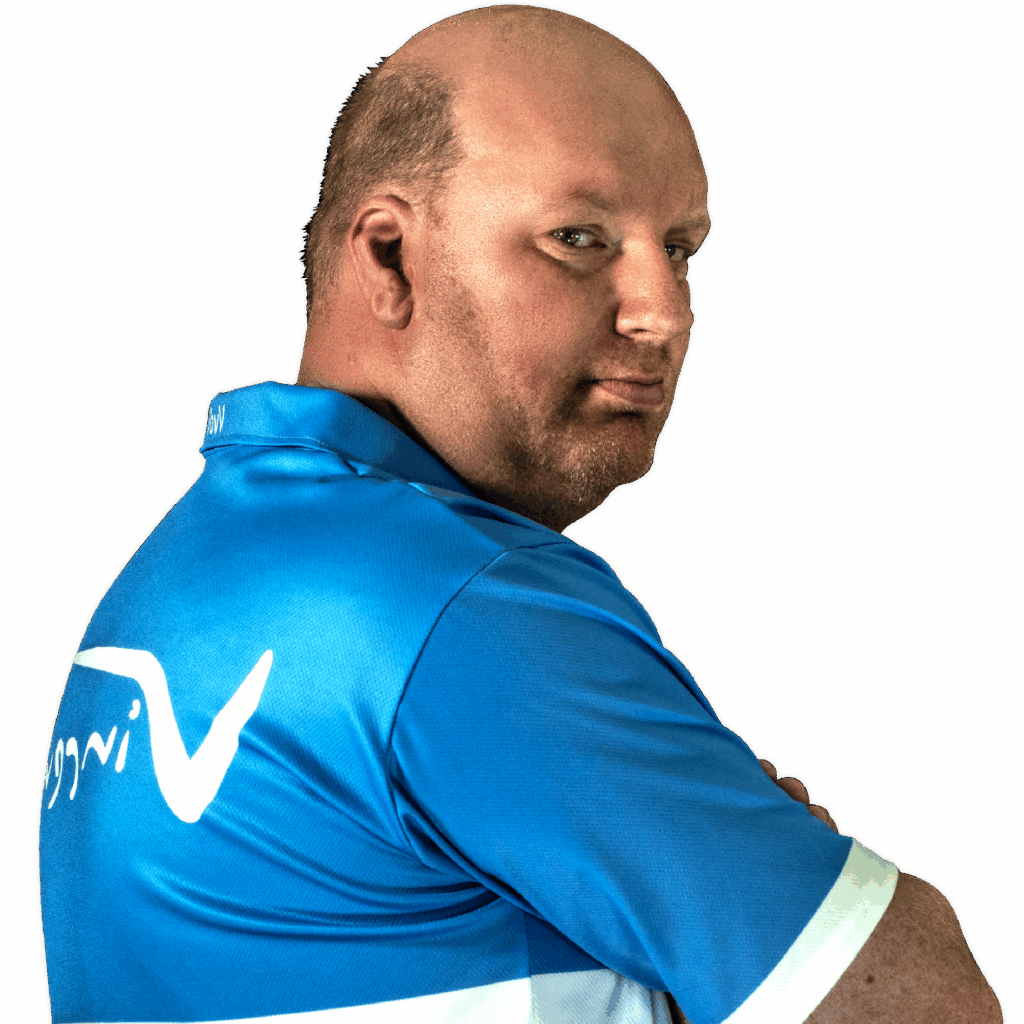
Yet, in a moment of pragmatic candour, the Dutch Destroyer acknowledged the symbiotic relationship between sport and spectacle.
“But sport isn’t just about winning – it’s also about rivalry. Something has to happen sometimes. I actually think the PDC was quite happy with it.”
And therein lies the paradox. For all the pearl-clutching, such flashpoints inject oxygen into the sporting bloodstream.
The genesis of the incident itself was deceptively innocuous, unfolding during the match’s climactic crescendo. Van Veen, perched on the precipice of victory, faltered at a pivotal juncture, opening the door for Littler – who, sensing both opportunity and audience, leaned conspicuously into the moment.
FULL DETAILS WITH DARTSDATABASE: FROM LIVE SCORES TO GRANULAR HISTORIC DATA
Van der Voort reconstructs the sequence with almost cinematic precision:
“It was 5–5. Van Veen misses 134 on double 7 – just one dart. Then Littler steps up for 90 to win the match. He hits triple 20, then goes inside on 15, so he leaves double 15 but hits single 15. Normally you’d be annoyed and reset. But Van Veen turns away, and at that moment he sees Littler gesture to the crowd like, ‘I’m getting another chance.'”
What might have dissipated as a minor exchange instead ignited a chain reaction.
“Then Littler reacts too aggressively afterwards – that’s where he goes wrong. He makes it bigger than it needed to be. After the match, he gives a kind of ‘Kevin handshake’—you know, one of those quick handshakes without looking at the other person.”
A moment that could have evaporated into the ether instead lingered—prolonged not by the act itself, but by its afterlife.
Indeed, Van der Voort is unequivocal in his assessment that the real combustion occurred away from the oche, in the echo chamber of the digital realm.
“If Littler had just said afterwards, ‘That wasn’t smart,’ it would’ve been nothing,” says Van der Voort. “But then he continues on social media, showing off what he’s won… but yeah, he’s still a kid.”
Here, the critique shifts from incident to infrastructure – from action to environment.
“It suggests he might not have the right people around him to tell him, ‘Don’t do that.’ That’s the real issue. Someone should just take his phone away for a bit – it’s not that complicated.”
It is less a condemnation of immaturity and more an indictment of absent counsel.
Will GVV Grow Into A Complimentary Asset For Darts?
Conversely, Van der Voort was notably complimentary of Van Veen’s composure, presenting him as a study in restraint amid the surrounding noise.
DARTS PLAYER MERCHANDISE AND COLLECTABLES AT OUR DARTSWORLD STORE!
“Some people aren’t natural ‘characters,’ but they grow into it over time in their careers. Moments like this help with that,” he says. “You shouldn’t let people walk all over you—you should say something if you don’t agree.”
In this framing, adversity becomes a crucible – an uncomfortable but necessary ingredient in professional evolution. And yet, despite the tempestuous discourse, Van der Voort remains steadfast in his belief that the saga’s lifespan will be fleeting.
“In the end, this will all be resolved quickly. It’s really nothing major.”
A storm in a tungsten teacup, then – albeit one that, for a brief and noisy moment, convinced everyone it was something far more seismic.
——ENDS—–
Images: PDC Europe