
The curtain is rising, the walk-ons are being polished, and the noise is already humming beneath the surface. The PDC Premier League Darts is back, and the 2026 campaign is now just days from ignition.
Eight of the sport’s most exquisitely dangerous arrow-smiths will spend the coming months colliding night after night, trading tungsten thunder in front of arenas overflowing with fancy-dressed revelry across the UK and Europe.
This year’s edition carries an extra layer of symbolism. The Premier League turns 21. A fully-grown institution now that, if American born, legally of the age to raise a glass of bubbly to its own longevity, audacity, and evolution. Few tournaments in darts have transformed so completely, so spectacularly, in such a short span of time.
To find its origins, you must rewind all the way back to 20th January 2005 and the King’s Hall in Stoke-on-Trent. A far cry from today’s cavernous arenas and choreographed chaos, this was where the experiment began. Naturally, the local titan Phil Taylor was front and centre, anchoring a line-up that now feels charmingly peculiar. Seven players. An odd number. A scheduling nightmare by modern standards. But that was the PDC’s vision at the time – until common sense prevailed a year later and eight became the magic number.
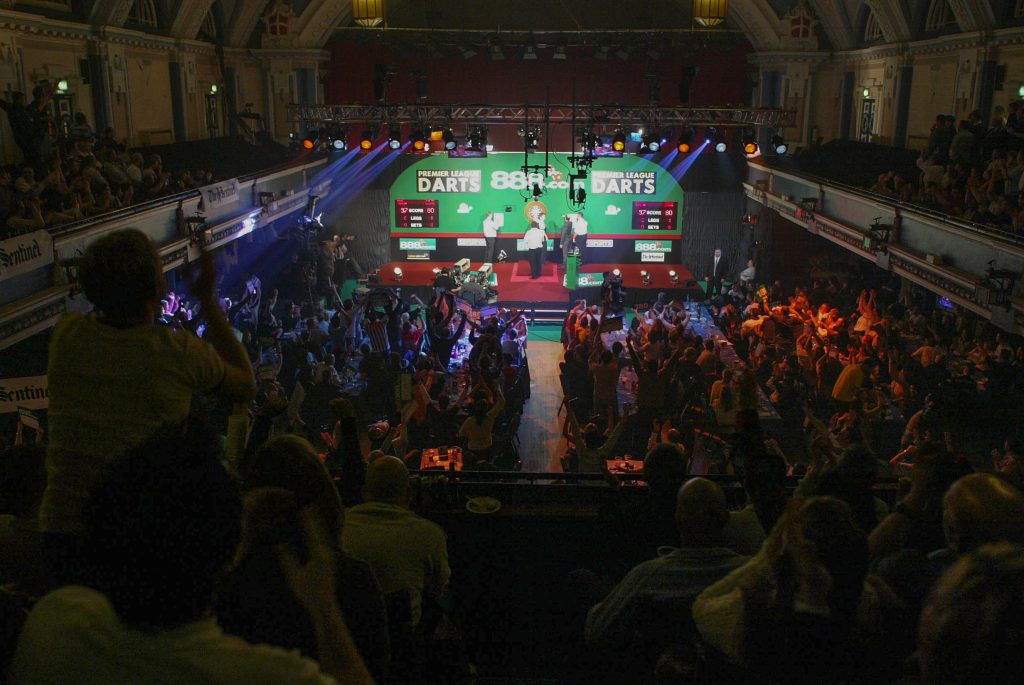
KINGS HALL,STOKE 20/01/05
PIC;LAWRENCE LUSTIG
GEN VIEW
Poetry, as it so often did in that era, belonged to Taylor. The Power claimed the very first Premier League victory with a 7-5 success over Wayne Mardle, before etching further history later that same evening by posting the competition’s first ton-plus average in a draw with Colin Lloyd. Even at conception, the standard was being dragged upwards.
The inaugural cast also included John Part, Roland Scholten, Peter Manley and Mark Dudbridge. Ten weeks of darting pilgrimage followed, stopping off in places like Widnes, Kidderminster, Doncaster and Plymouth, before the whole operation decamped to Manchester’s G-Mex. The finale was brutally emphatic. Taylor obliterated Colin Lloyd 16-4, lifting the title and pocketing a £50,000 cheque. It would be a good five years before James Wade finally wrestled that particular piece of silverware from the legend’s grasp.
Fast forward to a decade ago where the landscape had already shapeshifted. By 2016, the Premier League had expanded to ten players and adopted a purist league format. Two points for a win. One for a draw. Five matches per night. Best-of-12 legs. It was relentless, attritional, and unforgiving.
Only one name from that 2016 roster survives into the 2026 field, and it hardly requires forensic deduction to identify him. Michael van Gerwen, imperious then, imperious now, claimed his second Premier League crown that year. The rest of the cast still orbit the sport in various forms – James Wade, Gary Anderson, Raymond van Barneveld, Dave Chisnall, Peter Wright, and Michael Smith. Others, like Rob Thornton and Adrian Lewis, now mainly grace the exhibition circuit. As for Taylor, 2016 marked the penultimate chapter of his Premier League story.
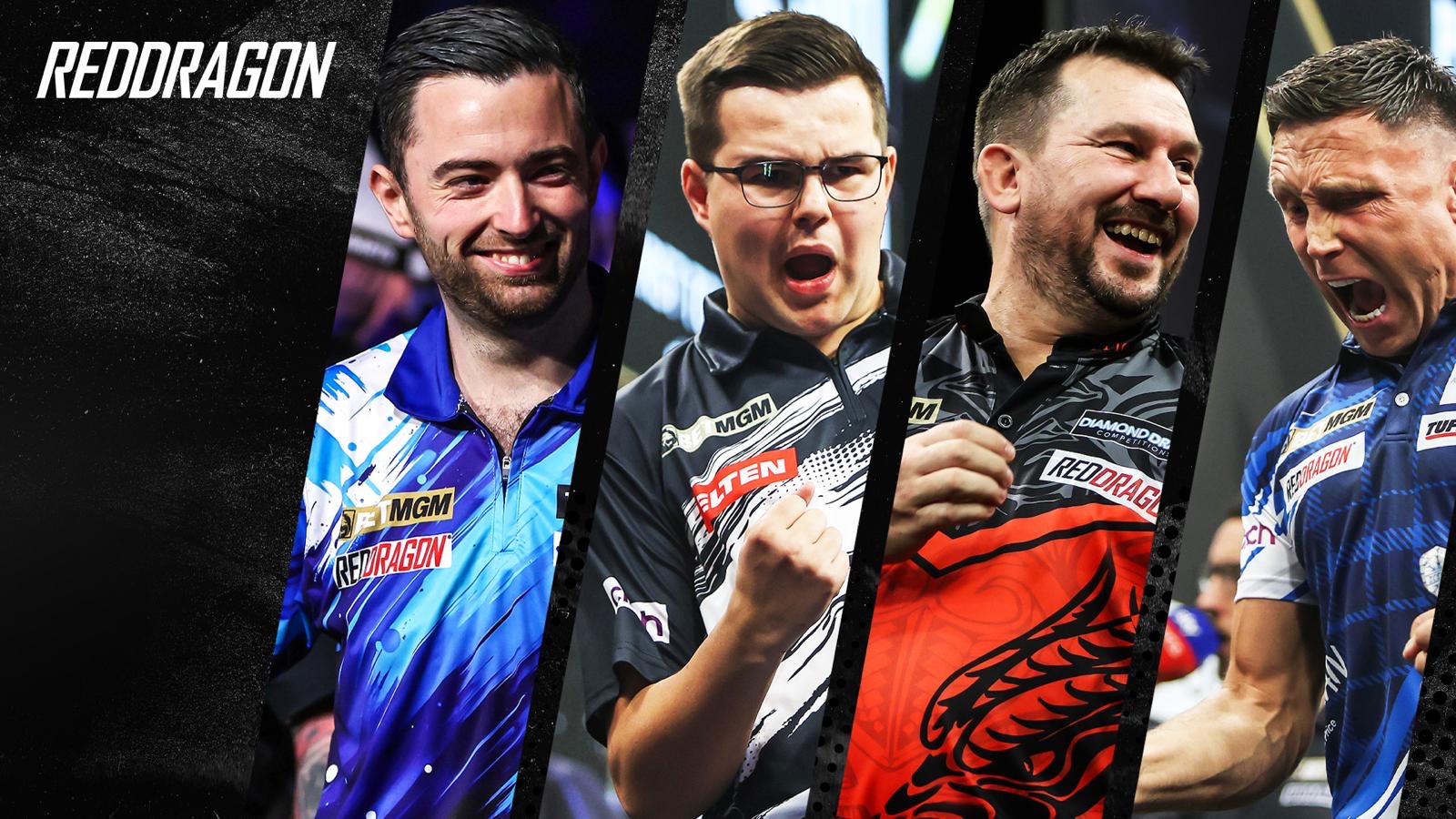
Now look at the Class of 2026. Nearly half of the current line-up were still in school a decade ago. Not one of them had lifted PDC silverware at that stage. The speed of transformation is staggering. Careers rise, eras collapse, and inevitability is rewritten almost annually.
Which inevitably prompts the question: who from this crop will still be standing when the 2036 Premier League rolls into view? The smart money points toward the young guns, but darts has never respected predictions. With a conveyor belt of talent constantly feeding the elite, certainty is a fool’s luxury. So perhaps the only sensible approach is the simplest one.
Sit back. Soak it in. Let it unfold. The 2026 campaign begins in Newcastle on Thursday 5th February, and among the mouth-watering opening-night clashes awaits a delicious reprise of the most recent PDC World Darts Championship final between hotshots, Luke Littler and Gian van Veen.
History, spectacle, and the next chapter – all ready to collide.
—–ENDS—–
Images: PDC/BetMGM