
Dutch-born, American darts star Jules van Dongen – once a figure of combustible promise and transatlantic intrigue – has found himself entangled in a cruelly uncooperative battle with his own physiology, a silent saboteur that has steadily eroded both rhythm and results. The condition, often called the yips, insidious and deeply disruptive, has cast a long shadow across the past two seasons, culminating in the forfeiture of his PDC Tour Card earlier this year.
For a player dubbed The Dutch Dragon, the symbolism is almost tragic. Fire replaced by fragility. Precision replaced by paralysis.
The nadir arrived under the unforgiving glare of the UK Open stage in 2025. Drawn against qualifier Simon Stevenson, van Dongen endured a bruising 6-0 first round defeat, his average collapsing to a meagre 61.11 – a number that scarcely resembled the standards he once set. But beneath the statistical wreckage lay something far more profound than a poor performance.
PLAYER PROFILE IN STATS AND FACTS: Jules van Dongen on dartsdatabase.co.uk
It was not simply a loss. It was a rupture. In the aftermath, van Dongen revealed the extent of the internal chaos he had been attempting to contain, describing an experience that transcended ordinary sporting struggle and drifted into something far more alarming.
Speaking to AD – Algemeen Dagblad, the prominent Dutch daily newspaper – he offered an unfiltered account of the ordeal:
“It’s like a short circuit in your hand. I just broke completely after three darts. I played the entire match with tears in my eyes. I thought: I’m not going to give up. That’s not in me. I kept my head down the entire match. It was very hard, especially with so many people watching. I could feel their discomfort.
“An hour later I had a panic attack. I had never had that in my life. Then the PDC doctors came to the rescue. I had hoped the PDC would have offered a bit more help. If Michael van Gerwen had the same problems, it would get much more attention.
“When it kept getting worse, I started seeking help. Of all those specialists, not one advised me to see a neurologist. If I had known that earlier, my ordeal would probably have been much shorter.”
There is a brutal honesty in those words – not the polished rhetoric of post-match reflection, but the raw, unvarnished language of someone grappling with a body that has suddenly become unreliable.
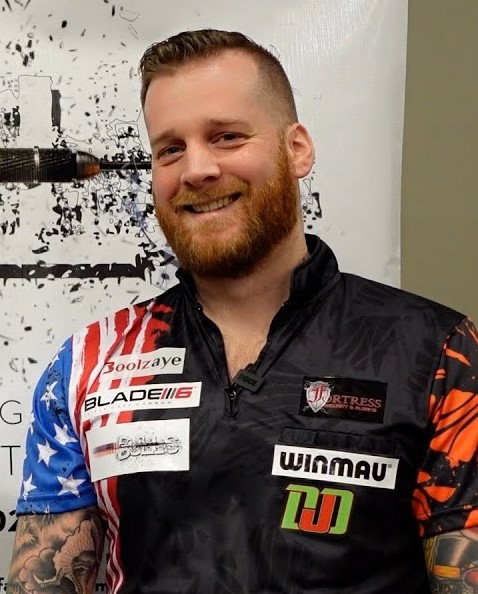
Determined to reclaim control, van Dongen returned to the Netherlands, seeking specialist intervention in a bid to decode the malfunction. There, he began working closely with neurologist Erik van Wensen, a leading authority in movement disorders within sport.
The Science of The Darts Yips
Van Wensen’s research delves into the phenomenon widely known as the yips – a condition that has haunted athletes across disciplines, most notably in golf, where the simplest of actions can inexplicably disintegrate under neurological interference.
THE GLOBAL GAME: Check out DartsWorld’s dedicated area
What makes this affliction particularly perplexing is its selective nature? Unlike degenerative neurological diseases, these symptoms manifest only within the narrow confines of a specific task – in this case, the precise moment a dart should be released.
In clinical terminology, this is classified as a task specific dystonia. Van Wensen elaborated with clinical precision:
“Dystonia is an abnormal muscle contraction. Your brain commands your muscles to make deliberate movements, which should happen smoothly. With dystonia, multiple muscles contract that should actually be relaxed. That causes a kind of cramp.
“Darters always come with a typical story: that at a certain point they can no longer release the dart and their hand cramps. You can clearly see a cramp in Jules’s right hand. With his less talented left hand, he actually throws much more cleanly.
“There’s more going on. It’s a neurological problem in which the psyche does play a role, but it is not a psychological disorder. That bothers me.”
It is here that the narrative shifts from frustration to something far more intricate – a collision between neurology and performance, where the mind and body fall momentarily out of synchronisation.
For van Dongen, the implications have been profound. This is not merely a slump in form, nor a crisis of confidence that can be ironed out on the practice board. It is a physiological betrayal, one that strikes at the very mechanics of his craft. And yet, within that struggle lies a flicker of defiance.
DARTS PLAYER MERCHANDISE: Replica, Signed and Exclusive items at dartsworldstore.com
Because if darts is a game built on repetition, muscle memory, and microscopic precision, then reclaiming those elements is not simply a technical challenge – it is an act of reconstruction. A painstaking reassembly of trust between brain and body. For now, the dragon does not roar. But nor, crucially, has it been extinguished.
—–ENDS—–
Images: PDC Europe