
Phil Taylor’s relationship with the World Grand Prix remains one of the most fascinating paradoxes in darts history. No player has dominated the unique double-start event quite like The Power. He claimed a record 11 titles between 1998 and 2013, remaining undefeated in every final he reached. Yet…
The same tournament that showcased Phil’s brilliance also produced five first-round exits that perfectly illustrate the unforgiving nature of unique and popular tournament. The World Grand Prix has always stood apart.
DARTS PLAYER MERCHANDISE AND COLLECTABLES AT OUR DARTSWORLD STORE!
It is the only major on the PDC calendar that demands a double to begin scoring as well as to finish. That extra layer of pressure turns every leg into a potential trap. For most players it is an awkward, frustrating week. For Taylor, it became both his playground and, occasionally, his pitfall.
He won the inaugural event in 1998 and followed it with successive titles in 1999 and 2000. The pattern of dominance was already clear. When he did lose, however, the defeats were rarely ordinary. In 2001, qualifier Kevin Painter produced the first major shock, beating Taylor 2-1 in the opening round. It was a statement that the double-in requirement could neutralise even the greatest scorer in the game if the finishing deserted him.
Three years later came an even bigger earthquake. In 2004, little-known qualifier Andy Callaby dismantled Taylor 2-0. Callaby posted a career-best average in the process and walked away with one of the most celebrated giant-killings in the tournament’s or even darts history. Taylor, then at the absolute peak of his powers, simply could not get started. The doubles that usually arrived on demand stayed locked away.
The pattern repeated in 2007. Adrian Gray, a carpet-fitter ranked outside the world’s top 40, whitewashed the defending champion 2-0. Gray later admitted the knowledge of Taylor’s previous early exits had given him belief. That is the essence of the World Grand Prix. Once the favourite falters on the opening doubles, the underdog senses blood.
Taylor recovered to win further titles in 2008, 2009, 2011 and 2013, the last of those a clinical 6-0 demolition of Dave Chisnall in the final. His record in the latter stages remained near-perfect.
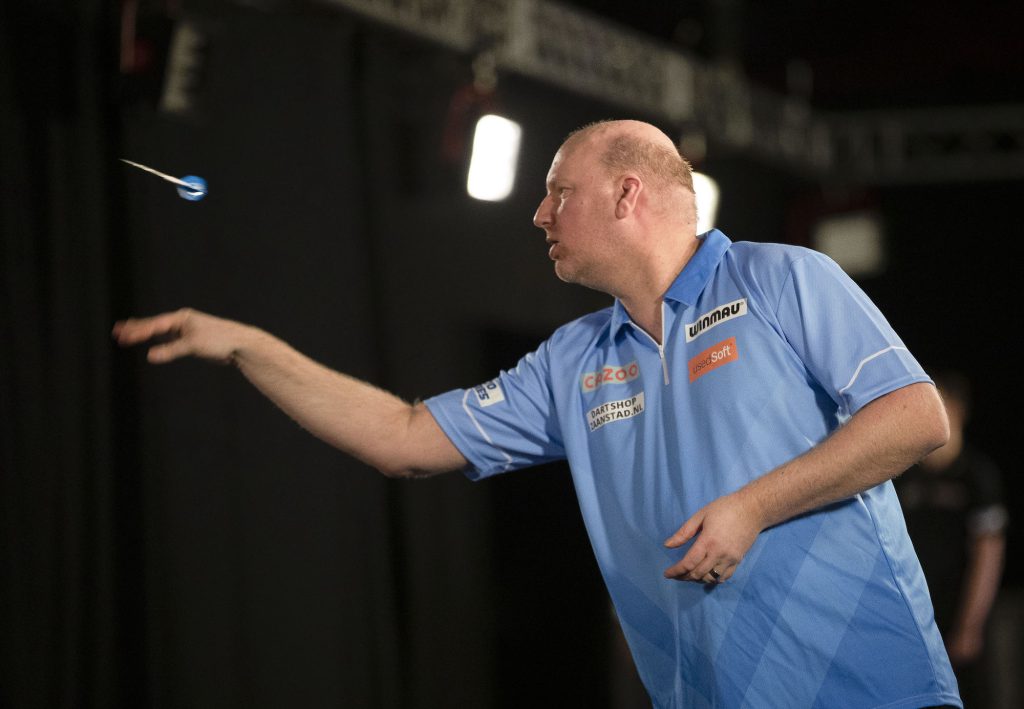
That first-round vulnerability never fully disappeared though. In 2015, Vincent van der Voort beat him 2-0 despite Taylor coming within a millimetre of a nine-darter. The following year, in what proved to be his final appearance at the event, Steve West edged a 2-1 thriller. Five first-round exits in total. Five reminders that the double-start format levels the field in a way no other major can.
Those losses do not diminish Taylor’s supremacy. Eleven titles and an unblemished finals record still place him streets ahead of anyone else. Michael van Gerwen, the next most successful player, has six. No one else has more than two.
What the early exits reveal is the peculiar character of the tournament itself. Scoring power alone is never enough. Timing, nerve and the ability to find that first double under pressure decide matches as much as the trebles that follow. In an era when averages climb ever higher and nine-darters become almost routine, the World Grand Prix continues to demand a different skill set.
MORE ELITE DARTS COVERAGE: Check Out Our Devoted PDC Area
Taylor mastered it more completely than anyone, yet even he could not conquer it. Those five first-round defeats remain the clearest evidence of why this event still feels different. When the Power was cut, it was usually because the doubles refused to cooperate. And in Dublin, now Leicester, that has always been enough to change everything.
Images: PDC / SKY